Building a World - One word at a time
When exploring a new facet of one’s creativity, it helps to have a seasoned professional along for the ride with good advice and encouragement. Scriptwriters Anna Schaible-Schur and Rick Chafe recently participated in the Professional Mentorship Program and shared their experience here!
Anna Schaible-Schur
Anna Schaible-Schur (she/her) is a creative content marketer, writer, and multidisciplinary artist with a passion for storytelling in all its forms. With a Gold Medal Honours degree in Rhetoric, Writing, and Communications from the University of Winnipeg, she understands how narrative structure and audience engagement shape compelling stories.
Her work spans scriptwriting, marketing, and visual art, including linocut design, all rooted in a fascination with human connection and transformation. Whether crafting a historical drama or developing brand messaging, Anna strives to uncover a story’s emotional core.
Rick Chafe
Rick Chafe (he/him) has been a playwright and screenwriter for 35 or so years. His plays have been produced at PTE, RMTC, TPM, SIR, Rainbow Stage, and other companies with acronyms for names across the country. The movie, Stand!, co-written with Danny Schur, opened in 11 cities across Canada. He’s taught, mentored, and dramaturged hundreds of students and dozens of all-grown writers. Since the pandemic he’s found a new home with the videomakers at Tripwire Media.

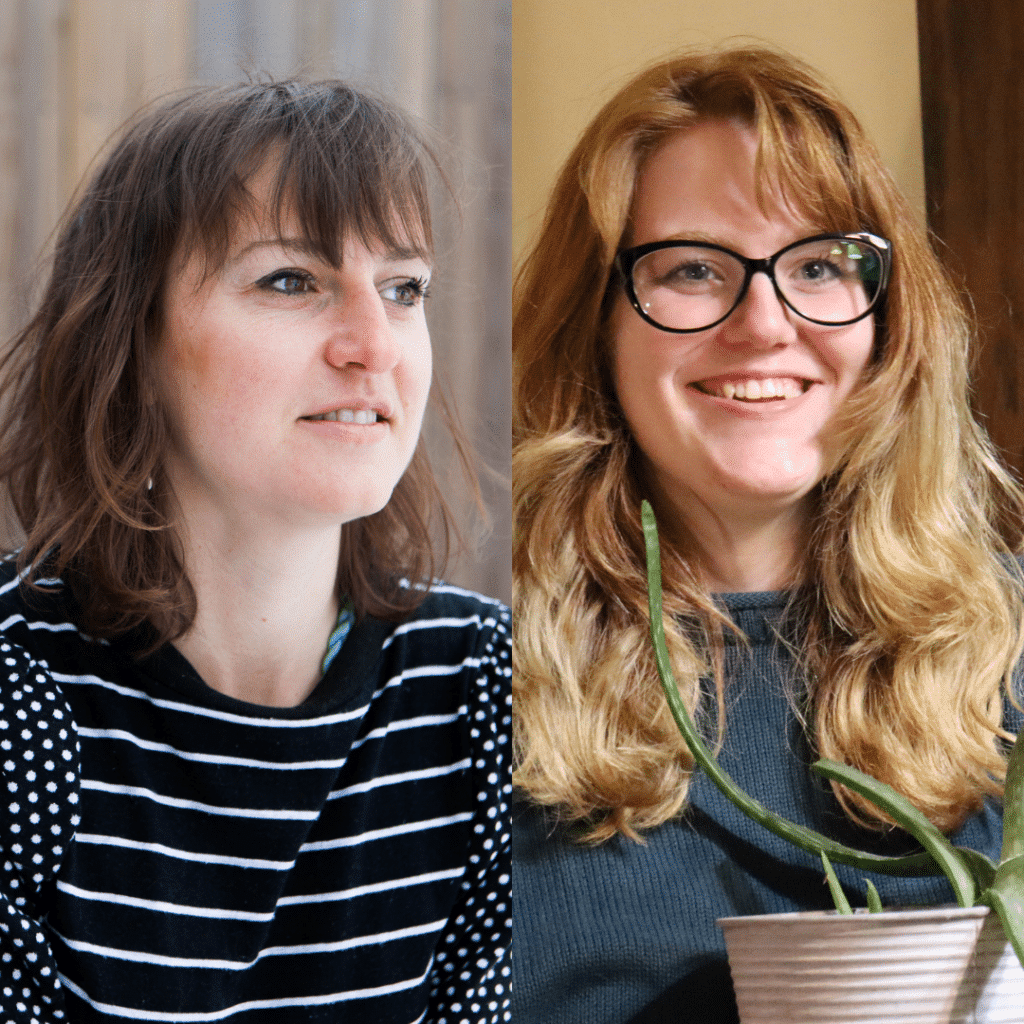
Mentor Rick Chafe (left) and mentee Anna Schaible-Schur (right) spent their mentorship period working on screenwriting and world-building.
How long have you been a practicing artist?
I’ve always been drawn to creative expression, whether writing, drawing, or linocutting, but scriptwriting became a serious pursuit during university. Taking creative writing courses during the pandemic, I found myself returning to my daydreams and trying to shape them into something tangible. What started as a personal experiment evolved into a passion I couldn’t ignore. This mentorship has given me the tools to take that passion further, honing my craft and understanding the industry.
- Anna
Since the year before the first Winnipeg Fringe Festival, 1989. I began writing with at the Manitoba Playwrights Association’s Open Door, led by Alan Williams, following pretty much the same format then as Anna and I followed all winter; bring new pages to every meeting, read, discuss, and be continually surprised to discover over and over what we were all trying to do at the same time and how we might do it. I’ve been working in theatre, and when I’m lucky film as well, ever since.
- Rick
“There’s something electric about pushing characters to their emotional and moral limits, forcing them (and myself) to wrestle with complex, messy truths.”
- Anna, on what brings her joy
What have you been working on together?
This mentorship has deepened my understanding of scriptwriting, from story structure and character psychology to historical world-building. I’ve studied screenwriters like John Truby and Sarah Polley, analyzed award-winning scripts, and received invaluable feedback from Rick on refining my scenes and characters. Balancing research and writing, I’ve strengthened both my craft and discipline. All of this has, of course, been fueled by an unholy amount of caffeine.
- Anna
While there’s been lots of chat about whatever’s on our minds in our bi-weekly meetings, the bulk of our two hours is spent discussing the new writing Anna has brought, and all the topics, themes and questions about the practice of story and screenwriting that rise out of it. That can be about the broad strokes and minutia of 18th century life, ships, class structures, disease, and how all of these will affect the situation and psychology of the characters from moment to moment. Which at the same time brings up the practice of storytelling, specifically as screenwriting, which is about showing characters in action, in 100 or so pages, with very few words on them. Mostly it’s dozens and dozens of questions, and it’s always been a joy.
- Rick
Image still of actor Gregg Henry facing the crowd in Rick Chafe's movie Stand!
What aspect of your work brings you joy?
One of my favourite parts of writing is creating characters and digging into their psychology. I love exploring how to use the past to display modern tensions as well. There’s something electric about pushing characters to their emotional and moral limits, forcing them (and myself) to wrestle with complex, messy truths. Writing also allows me to make sense of these thoughts, channel chaos into clarity, and watch my characters evolve beyond what I imagined.
- Anna
It’s always the happy accidents. The moments when you realize a scene is actually working in a surprising way. In theatre it’s the first reading with a cast that actually goes well. The moments an actor discovers what the writer actually put into a moment that’s been baffling them, and the way better surprise when an actor brings something completely different to the scene than never occurred to me. Mostly it’s the surprises that come out of the collaboration with the incredible theatre artists who impossibly make the play happen, and especially the opportunities to collaborate with other writers.
- Rick
“Mostly it's the surprises that come out of the collaboration with the incredible theatre artists who impossibly make the play happen, and especially the opportunities to collaborate with other writers. ”
- Rick, on what brings him joy
What have been your most positive takeaways from this mentorship session? Any favourite results or moments?
This program has given me accountability and a structured space to develop my script. Having an established writer provide direct feedback has been transformative, helping me uncover blind spots in my work, refine my ideas, and push my characters further. Rick has guided me through the technical aspects of storytelling and offered insight into the realities of sustaining a writing career. Our discussions have helped me balance creative ambition with the long-haul nature of writing. This mentorship has solidified my commitment to the craft and provided the fundamentals to see my script through to completion.
- Anna
Anna’s dedication and work ethic has been inspiring, especially in the face of an unexpected full time job arriving early in the program. What’s been exciting has been watching her bring a prose fiction writer’s technique into a completely different artform, and week by week seeing the lights going on as the prose turns into genuine screenwriting and Anna discovers what’s actually possible for a writer to build before directors and designers and actors even touch it. It’s been wonderful to watch Anna write, rewrite, grapple with the form, make new discoveries and keep coming back for more.
- Rick
READY TO TAKE YOUR ARTS CAREER TO THE NEXT LEVEL?
Discover More Artists Working in Film, TV, Video & Radio
- Film, TV, Video, Radio
-
+1 Visual Arts and Photography

- Design; product, graphic and fashion
-
+11 Film, TV, Video, Radio, Live Performing Arts, Theatre, Visual Arts and Photography, Drawing, Illustration, Painting, Sculpture, Writing and Publishing, Graphic Novels, Short Stories
- Film, TV, Video, Radio
-
+5 Live Performing Arts, Acting, Comedy, Theatre, Writing and Publishing